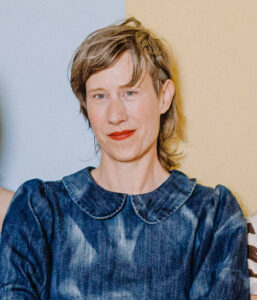
Andrea Donaldson,
Artistic Director,
Nightwood Theatre
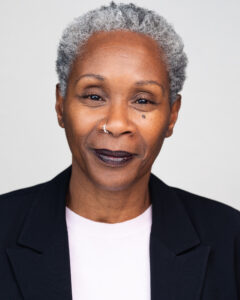
Josette Bushell-Mingo,
Director,
To a Flame
Andrea Donaldson: I met Josette Bushell-Mingo 16 years ago in a weeklong Directors Masterclass helmed by the formidable Peter Hinton through the Magnetic North Festival and Canadian Actors Equity Association. Josette and Martha Henry were our two guest directing instructors. For two weeks we learned and practiced all day long and then saw shows each night at the festival with a now “who’s who” of national theatre leaders – Mike Payette (Tarragon Theatre – Toronto), Ashlie Corcoran (The Arts Club – Vancouver), Debbie Patterson (Sick and Twisted – Winnipeg) to name a few.
Josette rocked our world. No longer were we attentive directors pontificating about script analysis around a table. Within minutes we were up on our feet, socks off and sweating almost immediately. She asked us deep thinkers to stop thinking just with our heads and listening with our ears, but to turn on our bodies’ awareness to each other and the room. Instantly the room was a theatre and we were performing gorgeously with intensity and presence. We were a synchronous chorus projecting unity, taking and throwing power and immersed in a legible story.
Josette developed a rich physical practice through her many years onstage as an actor and offstage as a director who deepened her understanding of the power of bodies making meaning through her work at the Tyst Teater – The National Touring Swedish Deaf Theatre.
I stole 20-minutes with her at dinner during tech to share some of her power with our newsletter community.
ANDREA: So, Josette, you’ve had such a formidable career uplifting equity-owed individuals. Tell me about how you created change, specifically in your work with Push, empowering Black creators toward leadership.
JOSETTE: I think a lot of that work happened because of timing. And because I learned very early on that not making change is far harder than making change. When you have nothing to lose, change becomes actually just the way forward. We as a Black British community needed a platform where we affirmed each other. And we affirmed each other outside the stereotype. And I said, wouldn’t it be great to get all of these diverse voices, these Black voices together to just talk about it. And then I realised after like the first, the first one was around my house, then it suddenly got too big and it went to a local theatre. And I said, well, wouldn’t it be amazing if we could show each other who we are? You know, break away from that historical norm, the racist stereotype, and show how can we break that with each other? Forget what I liked or what other people think about each other because the internalised racism and that, you know, to decolonise yourself is very present. It was done for Black people to see each other. It became something very, very different. And then I was lucky that it absolutely ballooned out. Little did I know that, you know, almost 30 (or 25) years later, we’ll be sitting desperate for that affirmation again.
ANDREA: Ok, so then you found yourself in Sweden. Somehow you found yourself there…
JOSETTE: Love.
ANDREA: And what compelled you to become fluent in Swedish Sign Language?
JOSETTE: Respect. To be an ally. I was asked by the head of the National Deaf Theatre of Sweden if I would apply as Artistic Director. The Artistic Director had heard about the work that had been done with Push and said, would you apply? You’ve got to go through the process, but I’ve seen you, I’ve heard what you do. And I was like, well, I can’t speak Swedish, and I can’t really sign, but okay, yeah, I’ll go for it. It was a rigorous interview process that I can say, and I was interviewed by some of the best deaf activists of their generation. So that was absolutely terrifying. And I remember sitting there, I’d be doing, “you know, these are the repertoires I would do”, and they said, “oh, it all sounds great, but will you fight for us?” And I remember looking at him and saying, “you won’t find a better soldier”. And then the rest is history in that sense. A life-changing 12 years. Yeah, something was there and it changed me completely. I still have this gift. I’m here now at Nightwood to be drawn to it. I can now sign, I can communicate more or less with any deaf person. I can communicate, I can be comfortable in the culture. I mean, that is a gift. And it’s beautiful, because it inspires me, because it changes my work; each one seems to elevate the other. And my greatest job was to hand the leadership over to a deaf leader.
ANDREA: So you’ve been working with Dawn on developing this project for 15 years. What has kept the flame alive for you, in To a Flame?
JOSETTE: Knowing that this fight represents a far bigger fight for her. Leaning into her work and saying, I believe in it and I’ll do it. If Dawn calls, I’ll go, if I can, and I’ve done that for 10 years. The greatest triumph is Dawn. And that whole room is there because of her. The next step is to make sure we get more deaf people in there.
And yeah, I think…falling in love with Canada. Everyone thinks Canada is the bee’s knees at the moment. You know, challenges on the country, but from where I am on the other side of the world, people are like, yes, go Canada. Because we are not brave enough there at the moment in the United Kingdom to say no to Trump. It’s a big deal. What brings me back here, I think, is the companies that I admire are here. This really high middle scale. I think also because of the cultural aspect of it, the history, the land. The recognition of that, the tension of it. Because it’s so diverse. Which is… yeah. Mm-hmm. That, I think, is a unique position.
Canada. I love it. I love Toronto. What brings me back is – I see the craft here.
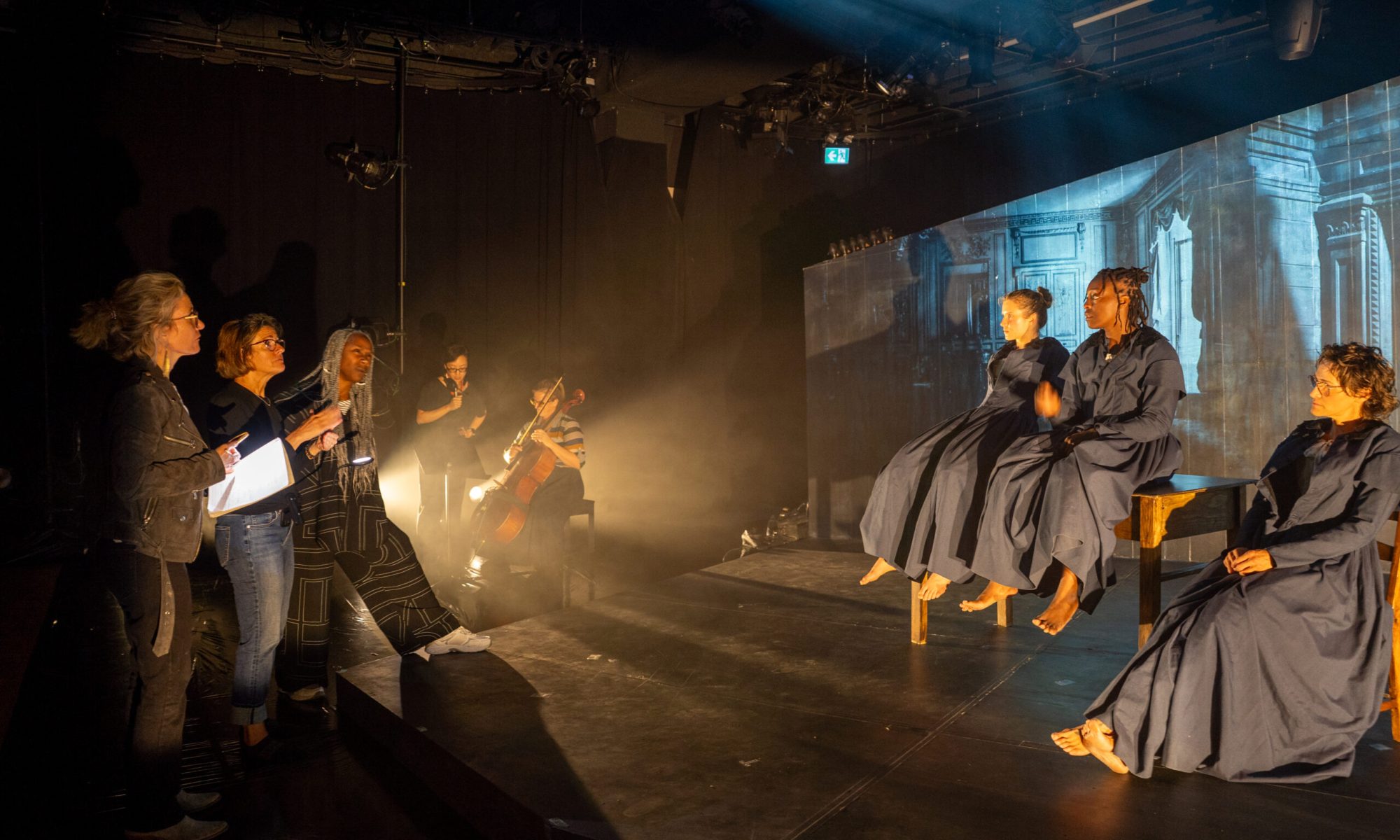
Photo of To a Flame rehearsals by Marzieh Miri.
Left to right: Birgit Schreyer Duarte, Peggy Zehr, Deanna H. Choi, Jillian Sauerteig, Juliana Monk, Nickeshia Garrick and Dawn Jani Birley.
Set and Costume design by Jung-Hye Kim.
Lighting Design by André du Toit
Projection Design by Laura Warren.